
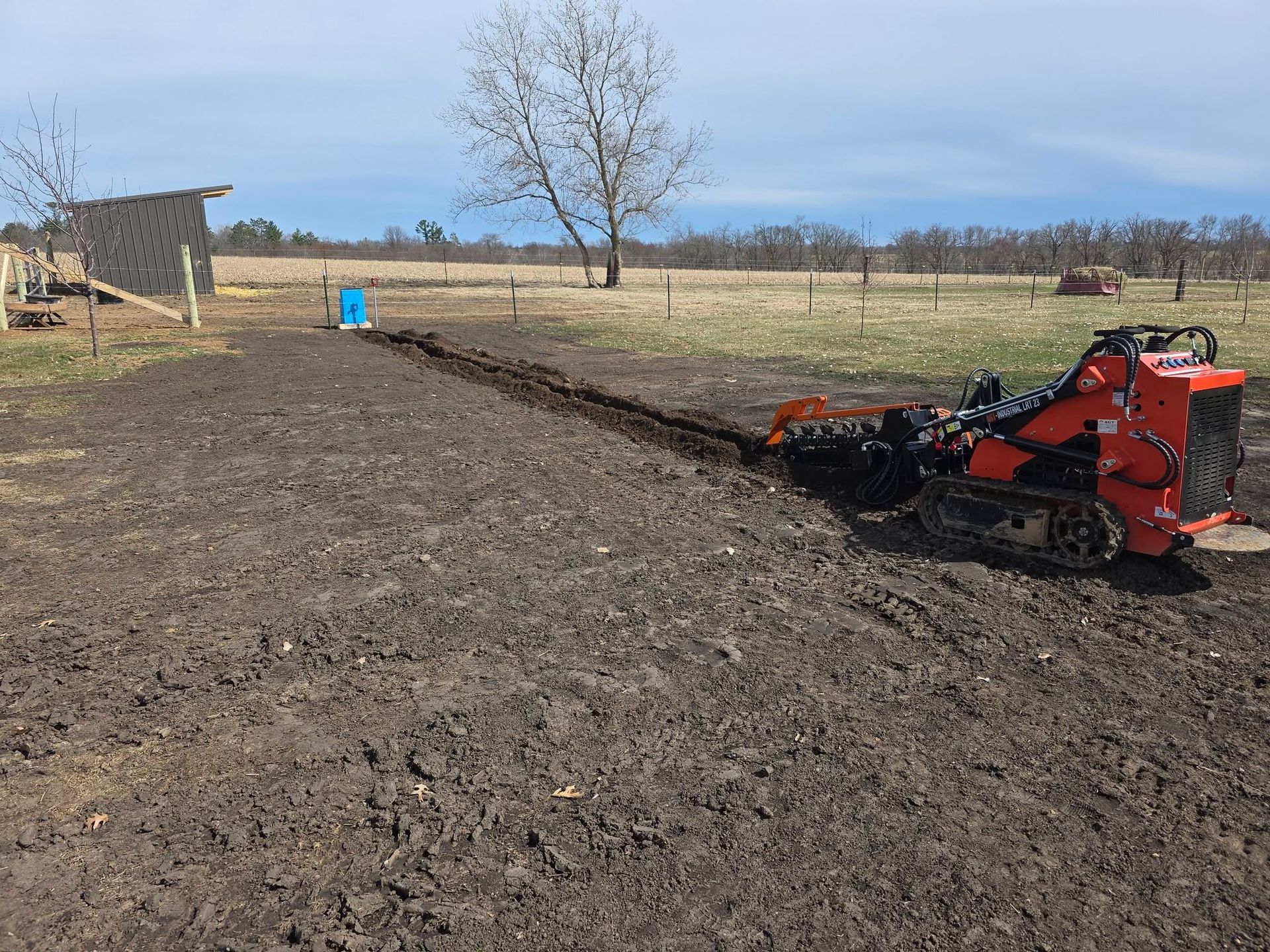
Underground Lines Installed to Proper Depth
Line Trenching & Water Line Installation in Pierz for new utility connections and replacement projects on residential and agricultural properties
Minnesota frost penetration reaches depths of four to five feet during winter, which means water lines installed too shallow freeze and burst when temperatures drop, leaving properties without running water until spring thaw and repairs can be completed. Proper trench depth, backfill compaction, and routing that avoids obstacles prevent those failures while minimizing disruption to driveways, landscaping, and existing infrastructure. Miller's Odds and Ends LLC handles line trenching and water line installation in Pierz, digging routes for new utility connections, well line installations, and replacement of aging pipes that leak or fail under freeze conditions common across central Minnesota properties.
Trenching creates pathways for water lines, electrical conduit, and other underground utilities by excavating soil to the required depth, maintaining consistent grade to prevent low spots where water collects, and routing around trees, septic systems, and structures. Installation involves laying pipe at proper depth, securing connections, and backfilling with compacted soil that prevents settling and maintains line protection under vehicle traffic and seasonal ground movement.
Discuss trenching and utility installation requirements based on your property layout and connection points before excavation begins.
What Proper Trenching and Installation Require
Accurate trenching depends on identifying existing utilities to avoid damaging electric, gas, or communication lines already buried on the property, and on calculating the correct depth to keep water lines below frost level while avoiding unnecessary excavation that increases costs and disruption. Routing decisions account for surface features like driveways and gardens, subsurface obstacles like ledge rock or existing pipes, and grade requirements that ensure water flows correctly from the source to the destination. Equipment selection and trench width vary based on pipe diameter, soil conditions, and whether the route crosses compacted areas that require restoration after backfill.
After installation finishes, water flows from the well or municipal connection to your home, barn, or outbuilding without freezing during winter or losing pressure due to leaks along the buried route. The excavated area is backfilled and compacted so that surface settling does not create depressions, and your property returns to usable condition without ongoing trenches or exposed pipe. You gain reliable water delivery that operates year-round without the risk of freeze damage that forces emergency repairs during cold months.
The service includes trenching, pipe placement, backfilling, and surface restoration to near-original grade, but does not include well drilling, pump installation, or connection to interior plumbing systems, which require licensed contractors depending on the scope of work.
Common Questions About Trenching and Water Line Work
Utility installation on residential and agricultural properties brings up questions about depth requirements, routing decisions, and how the work affects existing site conditions.
How deep do water lines need to be installed in Pierz?
Trenches typically reach five to six feet deep to place lines below the frost line, which prevents freezing and pipe damage during Minnesota winters when ground temperatures drop well below freezing.
What happens if the trench route crosses a driveway or paved area?
Excavation cuts through pavement, the line is installed, and the trench is backfilled and compacted before the surface is restored, though complete pavement repair may require a separate contractor depending on the material.
Why does routing matter for underground utility lines?
Proper routing avoids septic drain fields, minimizes disruption to landscaping, and reduces the distance between connection points, which lowers installation costs and decreases the potential for leaks or failures along the line.
When should water line replacement happen?
Replacement becomes necessary when existing lines develop repeated leaks, lose pressure due to corrosion or damage, or were originally installed at insufficient depth and freeze during winter.
What should property owners do before trenching begins?
Locate and mark existing utilities, identify access points for equipment, and confirm the route with the installer to ensure the trench follows the most efficient path without unexpected obstacles.
Miller's Odds and Ends LLC provides trenching and water line installation for properties across Pierz that need reliable utility connections installed to proper depth and routed for long-term performance. Schedule a site visit to review your property layout and utility connection needs.